PWGI in the Whirlwind of the Ecumenical Movement in Indonesia: Voicing Unity, Weaving Togetherness

By: Medi Putra, SH., S.Kom – Chairman of the Indonesian Church Journalists Association (PWGI)
Beritakampus.id – Jakarta, March 6, 2025 – Amidst the diversity of churches and the complexities of contemporary challenges, the ecumenical movement is becoming increasingly relevant and urgent. The Indonesian Church Journalists Association (PWGI), as an organization dedicated to church reporting, holds a unique and strategic position within the whirlwind of the ecumenical movement in Indonesia. This article will delve into the role of PWGI in the context of this vital movement.
In this article, the author aims to discuss the Indonesian Church Journalists Association (PWGI) within the context of the ecumenical movement in Indonesia, addressing the following questions:
- What is the ecumenical movement?
- The ecumenical movement in Indonesia
- The role of PGI as a forum for the ecumenical movement of churches in Indonesia
- The vision and mission of the Indonesian Church Journalists Association (PWGI)
- The function of PWGI in building church unity within the framework of ecumenism
- What roles can the Indonesian Church Journalists Association (PWGI) play in the ecumenical movement?
Let’s begin by understanding:
1. What is the Ecumenical Movement?
Simply put, the ecumenical movement is a movement to realize the unity of the Christian Church. Etymologically, the word Ecumene originates from two Greek words: oikos, meaning “house,” and monos, meaning “one.” This term is simplified into Indonesian as “one house.” Furthermore, Ecumene is defined as a “one house” movement, implying that all Christians in various parts of the world essentially live side-by-side in one same house, which is the house of God.
The term ecumene actually existed since ancient Greece within the scope of the Roman Empire’s rule. At that time, the word ecumene referred to the world considered to be under the authority of Catholic Rome. However, the emergence of various conflicts that divided the Catholic churches caused this term to undergo a shift in meaning.
One of the church division incidents that became the forerunner to the ecumenical movement occurred in 325 AD. At that time, the followers of Arius were declared heretical by the Council of Nicaea I, leading to many of his followers being persecuted and mass murdered. Similar events recurred several centuries later, specifically in 1054. The Nicene Creed split the Roman Catholic Church from the Eastern Orthodox Church and caused fierce conflict between the two opposing camps.
With the numerous divisions occurring, churches around the world engaged in negotiations to unite all church fellowships for Christians. These negotiations were based on the prayer of Jesus in John 17:20-21:
“I do not ask for these only, but also for those who will believe in me through their word, that they may all be one, just as you, Father, are in me, and I in you, that they also may be in us, so that the world may believe that you have sent me.”
Thus, it can be concluded that the Ecumenical movement is a manifestation of the prayer and hope of Jesus Himself. This movement has actually existed for a long time in Europe, but only a few churches participated in the early days. It was only at the end of the 19th century and the beginning of the 20th century that Ecumene began to spread to various other parts of the world, including Indonesia.
In the current church context, ecumenism refers to efforts to overcome divisions and build unity among various Christian church denominations.
The ecumenical movement emphasizes that behind the differences in traditions, theology, and ecclesiastical practices, there is a common faith in Jesus Christ as Lord and Savior. Ecumenism does not mean standardizing all churches, but rather building 1 close fellowship, cooperation, and mutual understanding among different churches.
2. The Ecumenical Movement in Indonesia
The ecumenical movement in Indonesia has a long history, rooted in the early 20th century. The spirit of togetherness and unity began to grow among Protestant churches with diverse missionary backgrounds and traditions. A significant milestone in the history of ecumenism in Indonesia was the establishment of the Council of Churches in Indonesia (DGI) on May 25, 1950, which later changed its name to the Communion of Churches in Indonesia (PGI) in 1984.
The ecumenical movement in Indonesia is not limited to Protestant churches. From the beginning, a spirit of dialogue and cooperation was also built with Catholic churches and other Christian traditions. Today, the ecumenical movement in Indonesia is increasingly inclusive, involving various religious organizations, non-governmental organizations, and individuals concerned with issues of justice, peace, and humanity.
3. The Role of the Communion of Churches in Indonesia (PGI) as a Forum for the Ecumenical Movement of Churches in Indonesia
PGI plays a central role as the main forum for the ecumenical movement in Indonesia. As the umbrella organization for the largest Protestant churches in Indonesia, PGI has several key functions in the ecumenical movement:
- Facilitating Dialogue and Meetings: PGI routinely holds meetings, seminars, workshops, and dialogue forums that bring together representatives from various member churches, ecumenical institutions, and other partners. These forums become platforms for sharing, discussing, and finding joint solutions to various church and national issues.
- Encouraging Inter-Church Cooperation: PGI promotes and coordinates various forms of cooperation among churches in the fields of ministry, education, social services, and advocacy. This cooperation strengthens the impact of church ministry and strengthens inter-denominational relationships.
- Voicing Common Issues: PGI becomes the spokesperson for churches in Indonesia in voicing issues of justice, peace, human rights, environmental protection, and other national issues. PGI’s representative voice carries moral weight and significant influence at national and international levels.
- Maintaining the Document on Church Unity (DKG): PGI plays an important role in maintaining, disseminating, and implementing the Document on Church Unity (DKG), an important theological document that serves as a common foundation for the ecumenical movement in Indonesia.
4. Vision and Mission of the Indonesian Church Journalists Association (PWGI)
The Indonesian Church Journalists Association (PWGI) exists with a noble vision: “To be a credible and relevant information pillar for the church and society.” This vision reflects PWGI’s commitment to presenting accurate, balanced, and beneficial information, both for the internal church community and for the wider society.
To realize this vision, PWGI has the following missions:
- Developing Quality Church Journalism: Enhancing the capacity and professionalism of church journalists through training, education, and the development of journalistic ethical standards.
- Reporting on Church Activities and Roles: Covering and reporting on various church activities, both at local, national, and international levels, as well as highlighting the role of the church in society.
- Building Communication Bridges: Becoming an effective communication liaison between the church and society, government, and various other parties.
- Promoting Christian Values: Disseminating Christian values such as love, justice, peace, and brotherhood through journalistic works.
5. Function of PWGI in Building Church Unity within the Framework of Ecumenism
The Indonesian Church Journalists Association (PWGI) has a strategic function in building church unity within the framework of ecumenism through various means:
- News Coverage that Builds Understanding: PWGI can report on various ecumenical activities and programs carried out by PGI and member churches. This news coverage helps build a better understanding of the meaning and purpose of the ecumenical movement among congregations and the wider community.
- Voicing Ecumenical Values: Through articles, news reports, features, and other media programs, PWGI can voice ecumenical values such as tolerance, dialogue, cooperation, and unity. This news coverage can inspire and encourage churches to become more involved in the ecumenical movement.
- Becoming a Forum for Discussion and Reflection: PWGI can become a platform for discussion and reflection on relevant ecumenical issues. Through opinion columns, interviews, and analyses, PWGI can facilitate the exchange of ideas and perspectives on the challenges and opportunities of the ecumenical movement in Indonesia.
- Promoting Ecumenical Figures: PWGI can introduce and promote church and community figures who have a strong commitment to the ecumenical movement. News coverage about these figures can be an inspiration and role model for others.
6. Roles that PWGI Can Play in the Ecumenical Movement
The Indonesian Church Journalists Association (PWGI) has a very significant and diverse role in the ecumenical movement. Some concrete roles that PWGI can play include:
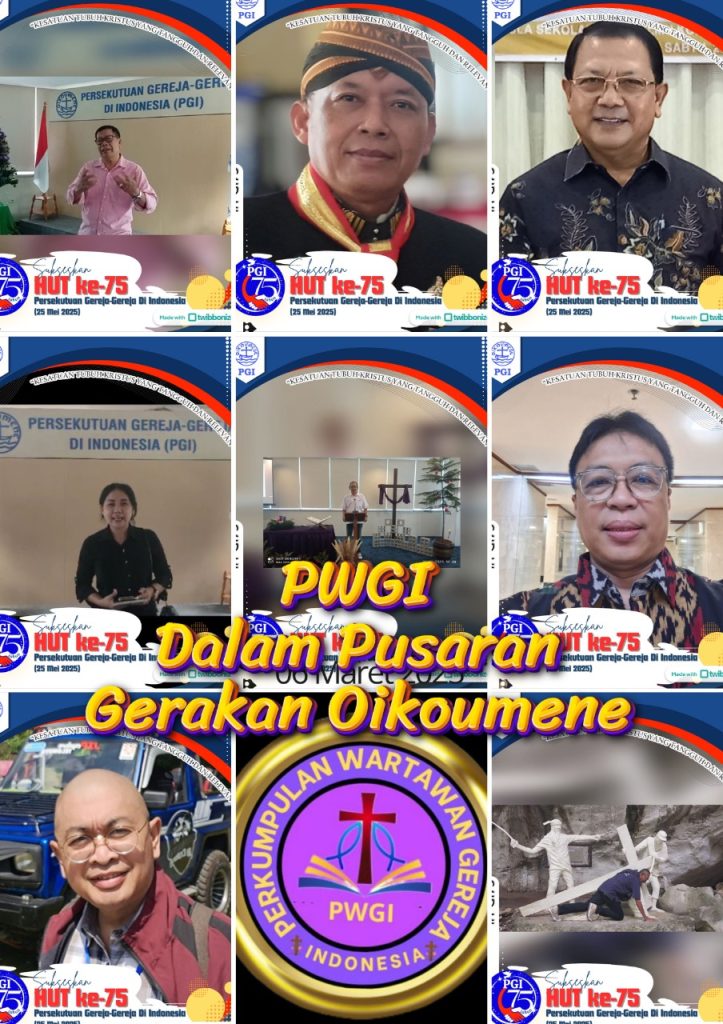
- In-Depth Coverage of the 75th PGI Anniversary Series: PWGI can provide comprehensive and in-depth coverage of the entire series of PGI’s 75th Anniversary activities, which carry the ecumenical theme “The Unity of Christ’s Body, Tough and Relevant.” This coverage will be an effective means of disseminating the ecumenical message to a wide audience.
- Ecumenical Education Programs: PWGI can develop educational programs about ecumenism through various media platforms, such as serial articles, infographics, short videos, or podcasts. These programs can explain the concept of ecumenism in a simple and engaging way, as well as its relevance to church and community life.
- Organizing an Ecumenical Journalism Forum: PWGI can organize an ecumenical journalism forum or workshop, which aims to enhance the understanding of church journalists about ecumenical issues and develop their skills in reporting on the ecumenical movement effectively and in a balanced manner.
- Cooperation with Ecumenical Institutions: PWGI can establish closer cooperation with PGI and other ecumenical institutions in disseminating information and ecumenical messages. This cooperation can take the form of content exchange, joint coverage, or joint event organization.
- Encouraging Ecumenical Dialogue Through Social Media: PWGI can utilize social media as a platform to encourage ecumenical dialogue among young generations and the wider community. PWGI can create engaging and interactive content that promotes ecumenical values and invites people to participate in this movement.
The Indonesian Church Journalists Association (PWGI) has a very vital and strategic role in the ecumenical movement in Indonesia. As a pillar of church information, PWGI has the power to voice unity, weave togetherness, and inspire churches to become increasingly involved in the ecumenical movement. With strong commitment and continuous hard work, PWGI can become a significant agent of change in realizing the vision of a church that is one, holy, catholic, and apostolic in Indonesia.
“SOLI DEO GLORIA”